
Water for a coffee machine: taste and manufacturer requirements
Pleasant drinking water may still be unsuitable for an espresso machine. What to prepare before choosing water treatment for a café or restaurant.
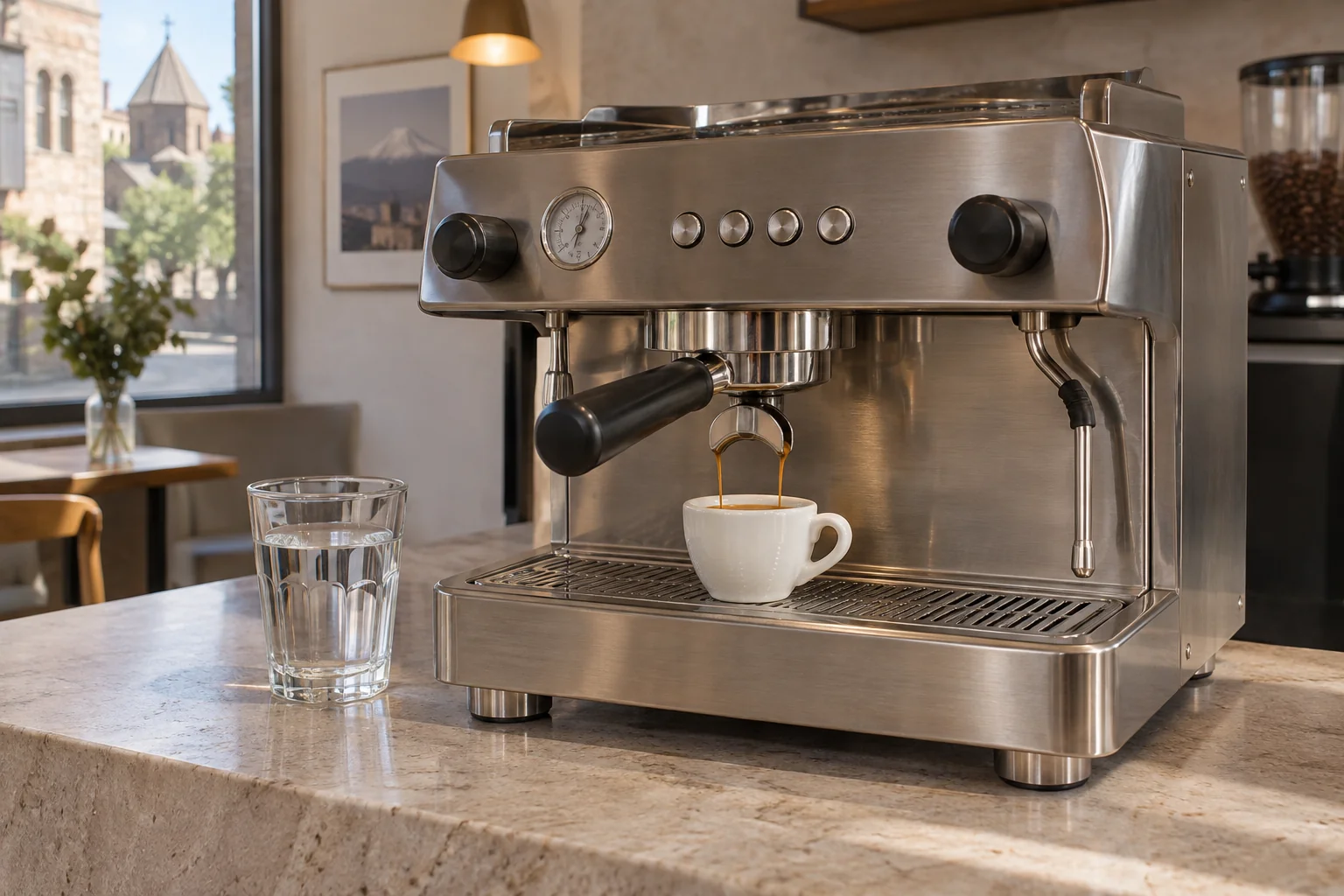
Start with the machine’s instructions
Taste alone cannot tell you whether water suits a coffee machine. The manufacturer may specify hardness, alkalinity, chlorides, pH and other parameters. La Marzocco, for example, lists them separately rather than relying on one TDS number.
Do not apply one manufacturer’s figures to every machine. Find the requirements for your model and give them to the treatment specialist. Hardness mainly relates to calcium and magnesium, while alkalinity measures water’s ability to neutralize acids.
Better taste does not guarantee suitable water chemistry
A carbon cartridge can reduce chlorine taste, but it is not designed to soften water. Softening and reverse osmosis also act differently. Match treatment to the water analysis and machine requirements.
The lowest possible TDS is not the goal. Equipment needs suitable water chemistry, and RO output may require further adjustment under the manufacturer’s instructions. Consider taste, scale and corrosion together.
Measure peak demand
Filac offers water treatment systems for cafés and restaurants. For a quote, provide the number of cups served per day, the appliances connected to the water supply, the flow each needs and which ones run at the same time.
Include rinsing and preparation water. Daily averages do not reveal demand during the busiest half-hour. Leave access under the counter or in the plant room for cartridge changes.
What to send Filac
Prepare appliance models, manufacturer water requirements, any existing analysis, installation-space photos and approximate demand. Filac prepares a quote for each business project.
Agree service hours, replacement-part costs and monitoring parameters in advance. Confirm the selected system’s compatibility with your equipment before installation.