
Why does white scale build up inside my kettle?
How clear water leaves a hard deposit when it boils, and what samples from two Yerevan taps can tell us about hardness.
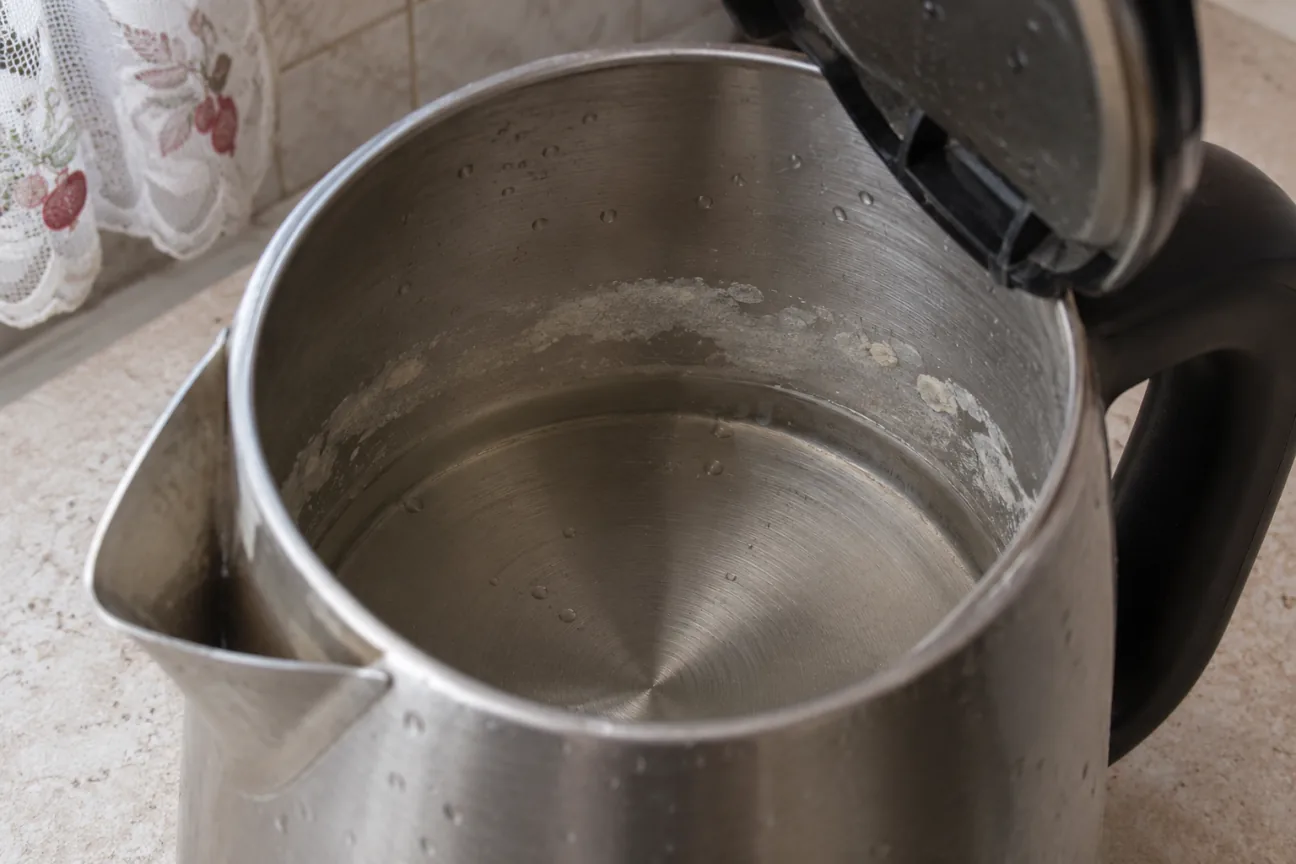
Why the chalky layer stays behind
A hard white crust on the base of a kettle is usually limescale. Water hardness comes mainly from dissolved calcium and magnesium. When you heat hard water, calcium carbonate can settle out on the hot surface. Empty the kettle and the deposit stays put.
A sediment cartridge catches suspended particles. The dissolved minerals that cause hardness pass through it. If scale is the problem you want to solve, ask whether the filter you are considering reduces hardness.
Two taps in Yerevan, sampled on the same day
On 6 September 2023, Tatev Khachatryan and Ani Sargsyan collected tap water across Yerevan for laboratory analysis. The reporters let each tap run for at least five minutes before taking a sample. A sample taken in Davtashen at 10:24 measured 2.68 mmol/L for hardness. A sample from Nork-Marash at 14:36 measured 1.6 mmol/L.
Each number describes one tap on one day. To find out the hardness of the water going into your own kettle, ask a laboratory about a hardness test and its sampling instructions. Use the tap you normally fill the kettle from.
Which appliances are affected?
If the deposit bothers you only in the kettle, follow its manufacturer’s descaling instructions and note when you clean it. That will tell you how long the scale takes to return. If you have also found deposits in the water heater, mention that when discussing treatment. Supplying one drinking-water tap is a different job from protecting appliances throughout the house.