
What does a TDS meter measure?
One number cannot tell you whether water is safe. Understand the reading before using it to compare water or make a filter decision.
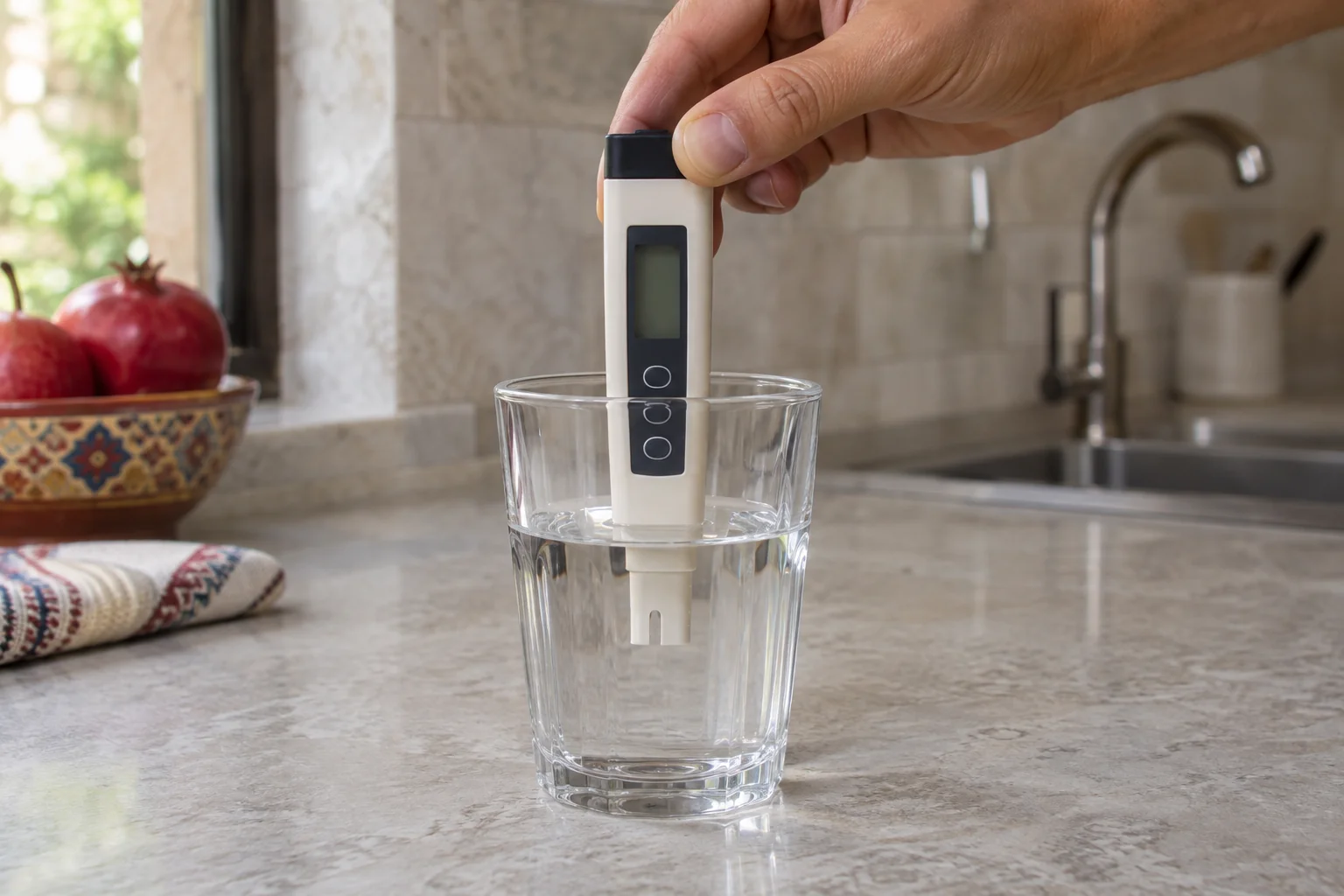
An estimate of dissolved substances
TDS means total dissolved solids, including salts of calcium, magnesium and sodium. A typical handheld meter measures electrical conductivity and uses it to estimate the dissolved-solids concentration.
Many meters display parts per million, or ppm. In dilute water samples, that is approximately equivalent to milligrams per litre. Record the units and meter model when comparing readings.
A low reading does not establish safety
The meter does not identify individual substances or their concentrations. It does not detect every microorganism or chemical contaminant. Water samples with different compositions can produce similar numbers.
WHO has not established a health-based guideline value for TDS. That does not remove requirements for individual substances. A concern about nitrate, for example, needs a nitrate test.
Hardness is a different measurement
Hardness mainly relates to calcium and magnesium. TDS includes other dissolved substances too, so it cannot by itself establish hardness or explain your kettle scale.
Readings before and after reverse osmosis can help monitor a system. Interpret the change using that model’s instructions and consistent measurement conditions. A remineralization stage can also change the outlet reading.
Questions for a Filac visit
Ask what was measured, in which units and from which tap. If you already have a filter, provide the model and last service date. A single number does not justify replacing every cartridge.
Filac can explain the reading alongside system selection, pressure and servicing. Questions about a specific contaminant require the appropriate laboratory analysis.